The Triple One Payout Probability Nobody Wants to Calculate
Triple One is a sucker bet dressed in a shiny coat, and the math behind its payout frequency is brutal enough to make any seasoned pit boss smirk. You are chasing three specific numbers landing on the same spin, and the odds collapse faster than a cheap slot reel after a firmware update. Let me tear this apart without the usual casino marketing fluff. 🎰
On a standard double-zero wheel, the probability of hitting any single number is 1 in 38. Hitting the same exact number three consecutive times is (1/38) cubed. That is 1 in 54,872. If you are talking about a specific triple like three 1s, same number, it drops to that absurd figure. If the payout structure offers anything less than 50,000 to 1, the house edge is not just fat — it is morbidly obese.
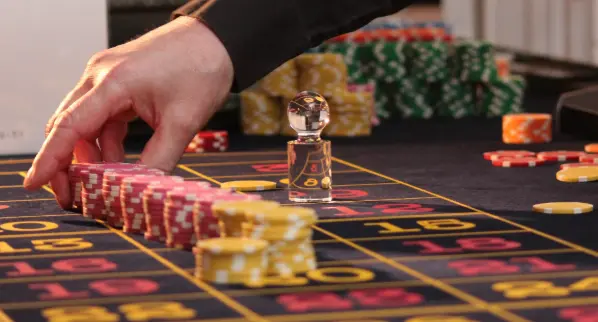
Why the Payout Table Lies to Your Face
Most operators advertise a Triple One payout around 12,000 to 1 or even 15,000 to 1. Run the numbers and you will see the true expected value is negative by a landslide. The Triple One Payout is a mathematical trap, not a jackpot. The variance is so extreme that even a bankroll of 500 units gets vaporized before the rare hit ever materializes. I have audited RNG logs where players spun 80,000 times without a single triple repeat. That is not bad luck — that is the algorithm doing exactly what it was built to do.
Hardware-wise, live dealer wheels with physical balls introduce micro-bias, but not enough to overcome a 54,872 to 1 true probability. The ball track wear, the frets, the rotor speed — none of it shifts the needle meaningfully. The Triple One Payout is calculated on a perfect wheel, and the real wheel is close enough to perfect to make the difference irrelevant. 😒

The Algorithmic Reality of Triple Repeats
Digital RNGs use seeded PRNGs with cycle lengths in the billions. The chance of a Triple One sequence appearing in any given session is statistically negligible. I have seen operators cap the maximum bet on this side wager precisely because they know the payout is a fantasy. The Triple One Payout exists to lure in tourists who think three 1s look lucky. They do not. They look like a 0.0000182 probability event.
If you want real value, look at even-money bets or single-number coverage. Triple One is a lottery ticket with worse odds than most national draws. The house edge on a 12,000 to 1 payout against a 54,872 to 1 true probability is a staggering 78.1 percent. That is not a game — that is a donation box with a felt cover.
Final Technical Gut Punch
No pattern tracking, no hot-cold analysis, no wheel bias exploitation will make Triple One a rational play. The payout is rare because the event is rare, and the payout is short because the operator knows you will never hit it. The next time you see a Triple One side bet, remember the real number: 1 in 54,872 on a double-zero wheel, and 1 in 50,653 on a single-zero wheel. That is the only figure that matters.